Move and carry
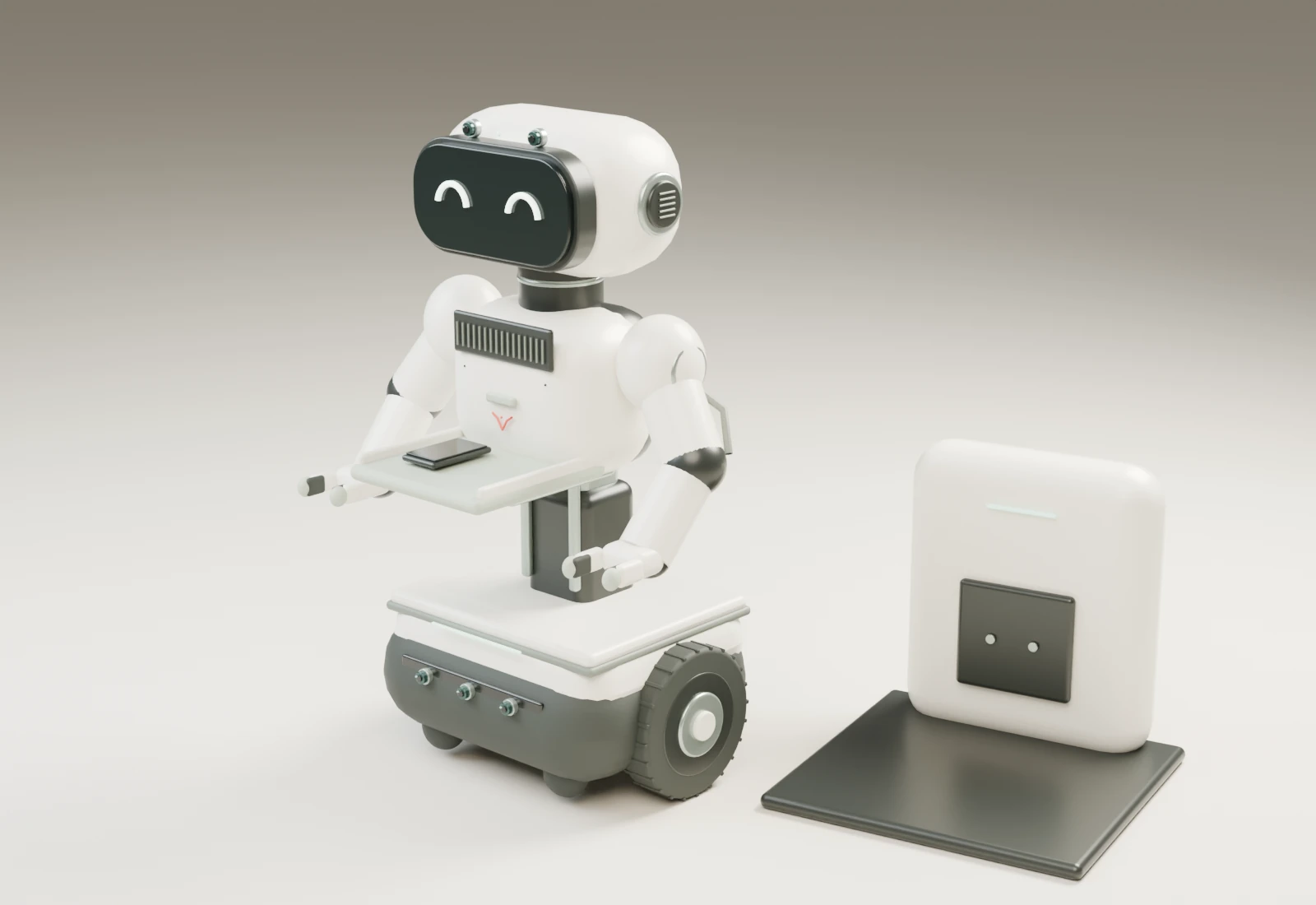
A wheeled base keeps the body compact. An integrated tray gives everyday items a place to rest during the trip.
 VEYDRIS SYSTEMS
Everyday items should stay within reach.
Everyday help. More independence.
A phone across the room. A dropped remote. A bottle out of reach. Norbit’s purpose is simple: bring everyday items to people with limited mobility. Its design brings a wheeled base, adjustable body, and two arms into a compact household robot.
Household assistance · Object retrieval · Item handoff
A useful place to start
Asking someone to bring a phone or pick up a remote can interrupt both people’s day. Norbit focuses on those small, repeated tasks that make independence harder than it needs to be.
The job is clear: find a familiar, lightweight item, bring it across the room, and offer it within reach. That simple story guides the whole design.

Norbit in Blender
Follow a bottle from out of reach to a comfortable handoff. Original Blender modelling and animation.
Original Blender modelling and animation. Design study.
Every part has a purpose: move through a home, reach an item, carry it steadily, and make the handoff comfortable.
A wheeled base keeps the body compact. An integrated tray gives everyday items a place to rest during the trip.
Two articulated arms and an adjustable body explore how one robot can reach objects at different heights.
A simple screen face, rounded surfaces, and clear physical controls make the design feel at home around people.
The next measure of the design is practical: comfortable handoffs, useful tasks, and dependable operation in real homes.
Talk to Veydris about Norbit